
Will vs Trust: What’s the Difference and Which Do You Need?
Introduction
Most people assume that if something happens to them, their assets will automatically go to their family.
Unfortunately, that’s not how it works.
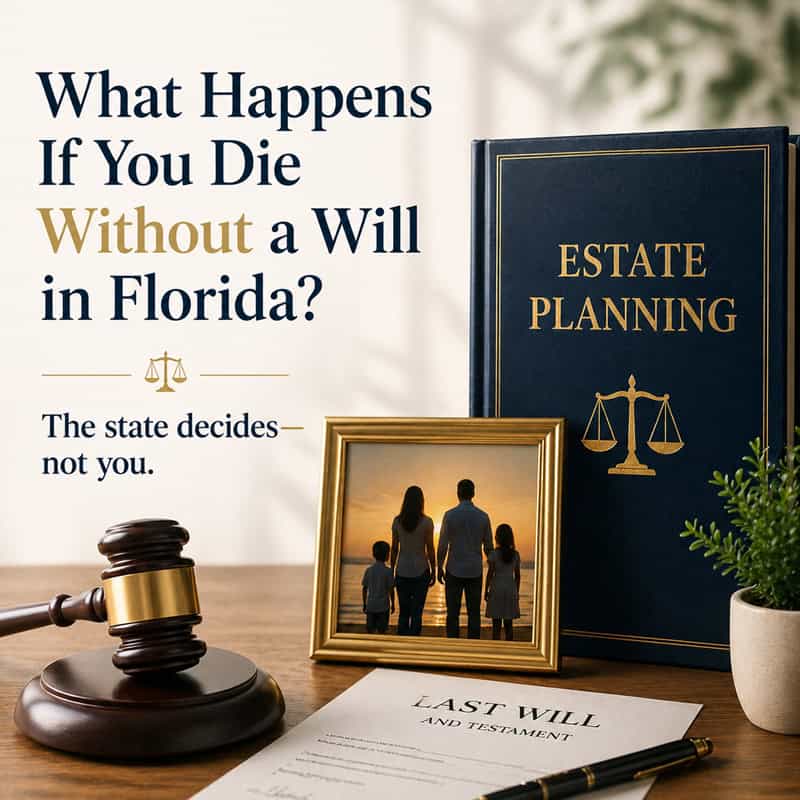
If you pass away without a will in Florida, the state decides how your assets are distributed—not you.
What Does “Dying Without a Will” Mean?
When someone dies without a will, it is called intestate.
This means:
- You have no legal instructions in place
- The court follows Florida intestate laws
- A judge oversees the process
Who Gets Your Assets?
Florida has a legal order for who receives your assets:
- Spouse
- Children
- Parents
- Other relatives
While this may sound reasonable, it often does not reflect your actual wishes.
What Problems Can This Cause?
Without a will:
- The process can take months or longer
- Your family may face legal costs and delays
- Decisions are made by the court—not your family
- It can create stress and conflict among loved ones
What About Minor Children?
This is one of the most important concerns.
If you have children under 18, the court may decide who becomes their legal guardian.
Not your family. Not your friends.
A judge.
How to Avoid This Situation
The good news is that this is entirely avoidable.
With proper estate planning, you can:
- Decide exactly who receives your assets
- Name guardians for your children
- Avoid unnecessary delays and confusion
Final Thoughts
Estate planning is not just about paperwork—it is about protecting your family, preserving your wishes, and creating peace of mind.
Call to Action
If you are unsure what protections you currently have in place, or if you have not created a plan yet, having a professional conversation may be one of the most important steps you take for your family’s future.